

Master the Flame: Why Angus Beef is the Gold Standard for Burgers in 2026
- emiliodacaret
- 5 days ago
- 12 min read

What if the secret to a world-class burger isn't in your spice rack, but hidden deep within the genetic marbling of the beef itself? You've likely felt the sting of a burger that looks incredible but eats like dry, crumbly cardboard. It's a total culinary heartbreak. You want that deep, beefy soul that only comes from precision craftsmanship. We understand that craving for pure satisfaction. That's why we are exploring exactly why angus beef for burgers is the only choice for those who refuse to compromise on quality.
Discover the professional secrets that make this heritage breed the gold standard for flavor in 2026. This isn't just about meat; it's about the science of the 80/20 fat rule and the legendary Maillard reaction. We'll show you how to spot high-quality Angus with a glance and select the perfect blend for a patty that drips with intense juice. Get ready to master the flame. We are diving into everything from fat percentages to artisan prep techniques to ensure your next cookout is nothing short of legendary. It's time to elevate your grill game.
Table of Contents
The Anatomy of Flavor: Why Beef Quality Defines Your Burger
A burger is a minimalist masterpiece. It is stripped down. Raw. Transparent. There is nowhere for mediocre ingredients to hide. Unlike a complex stew or a heavily sauced pasta, a burger relies almost entirely on the quality of its core ingredient. If you start with commodity beef, you end with a commodity experience. That is exactly why angus beef for burgers has become the non-negotiable standard for anyone serious about flavor in 2026. This year, the culinary world has moved past mystery meat. We demand transparency. We want to know the breed. We want to know the source.
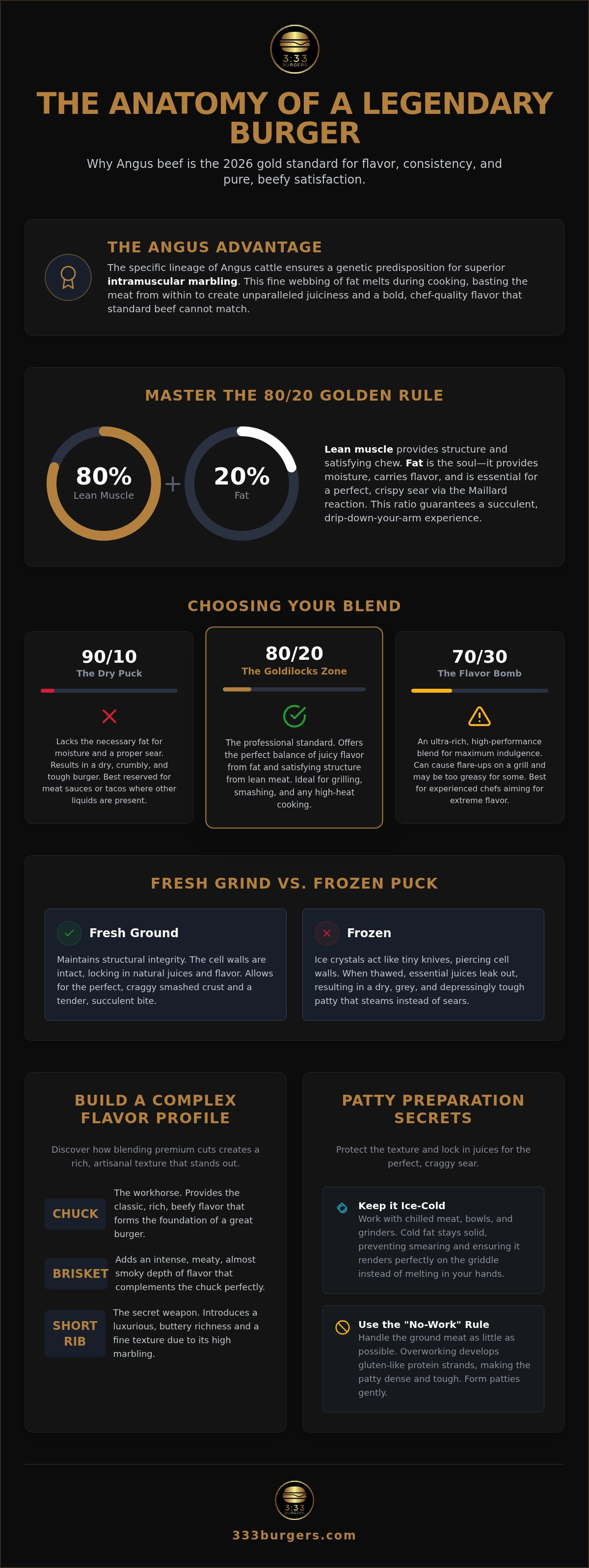
Heritage matters. The specific lineage of Aberdeen Angus cattle ensures a genetic predisposition for marbling that standard cattle simply cannot match. This intramuscular fat dictates everything. It controls the moisture levels. It defines the texture. It creates that intoxicating, beefy aroma that fills the air the second the patty hits the griddle. When you choose Angus, you are choosing a consistent, high-quality foundation that guarantees a superior sear every single time.
The Role of Protein and Fat in Burger Chemistry
Think of your patty as a biological engine. The muscle fibers are the chassis; they provide the essential structure and that satisfying chew that defines a great burger. But the fat is the fuel. Intramuscular fat is where the magic happens during the rendering process. As the heat rises, these tiny pockets of fat melt and baste the muscle fibers from the inside out. Burger beef is the ultimate synergy between structural lean muscle and rich, rendered fat.
Fresh vs. Frozen: The Texture Debate
Stop settling for frozen discs. When beef freezes, ice crystals act like tiny knives. They pierce the cell walls of the meat. Once that beef thaws and hits the heat, all the essential juices leak out immediately. This is the bleeding effect. It leaves you with a patty that is grey, dry, and depressingly tough. It ruins the Maillard reaction before it even begins.
Fresh-ground beef is the only path to an artisan result. It maintains its structural integrity. It stays juicy. It allows for that perfect, craggy smashed crust we crave. At 3:33 Burgers, we know that fresh, never-frozen Angus is the secret. It is the difference between a mass-produced puck and a hand-crafted masterpiece. Don't compromise on the grind. Keep it fresh. Keep it Angus.
The 80/20 Rule: Mastering the Fat-to-Lean Ratio
Precision is everything in the kitchen. When it comes to the ultimate patty, the 80/20 rule is your professional baseline. This ratio represents 80% lean muscle and 20% fat. It is the golden standard for a reason. Lean muscle provides the structural "bite" and the iron-rich foundation of the meat. But the fat? The fat is the soul of the burger. It is the primary reason why angus beef for burgers stands alone at the top of the food chain. Angus beef naturally excels at providing this balance through superior intramuscular marbling, ensuring that the 20% fat isn't just "added in" but is woven into the very fabric of the protein.
Don't fall for the "Extra Lean" trap. Beef labeled 90/10 or 95/5 is the primary enemy of a delicious experience. Without enough fat, protein fibers tighten and seize up under heat, turning your dinner into a dry, rubbery puck. Fat acts as a high-performance lubricant. It prevents the muscle fibers from becoming tough and stringy. More importantly, fat is a flavor carrier. The volatile compounds that give beef its distinct, mouth-watering aroma are fat-soluble. When the fat renders, it coats your palate and intensifies the beefy notes. High-quality USDA beef quality grades like Prime and Choice are literally defined by this marbling, proving that fat equals quality.
Why Fat is Essential for the Perfect Sear
You want that craggy, dark-brown crust. That is the Maillard reaction. It requires intense heat and a conductive medium. Fat provides the "oil" needed for this reaction to explode across the surface of the meat. Without a 20% fat minimum, your patty will likely stick to the griddle, tearing apart when you try to flip it. In a smashed style burger, that rendering fat fries the edges of the meat, creating a lacy, crispy texture that is impossible to achieve with lean blends. It is the secret to that juicy, indulgent mouthfeel we all crave.
Comparing Ratios: 70/30 vs 80/20 vs 90/10
Choosing the right blend depends on your goal. A 90/10 blend is best left for health-conscious taco bowls or meat sauces where moisture comes from other ingredients. For a standard grilled burger, 80/20 is the "Goldilocks" zone. It offers the perfect balance of structure and juice. However, if you are chasing the ultimate flavor bomb, some artisans move toward a 70/30 blend. This high-performance mix is specifically designed for smashed styles, where the extra fat ensures a deep, mahogany crust and a center that remains incredibly succulent. If you want to see this science in action, try a Double Smashed Cheeseburger and taste what a perfect fat-to-lean balance really feels like. It is a total game changer.
The Best Cuts: Selecting Chuck, Brisket, and Short Rib
An elite burger isn't an accident. It's a calculated construction of specific muscle groups. If you're grabbing a generic tube of "ground beef" from the supermarket, you've already lost the game. Understanding the specific cuts within the animal is why angus beef for burgers becomes a culinary superpower. You aren't just buying meat; you're buying a flavor profile. In 2026, the trend is moving away from mystery blends and toward high-transparency, artisan grinds that highlight the unique characteristics of the shoulder, chest, and ribs.
Ground Chuck: The Foundation
Meet the undisputed king of the base. Ground chuck comes from the shoulder of the steer. It is the gold standard for a reason. It naturally carries a near-perfect lean-to-fat ratio that hovers right around that 80/20 sweet spot we discussed. Chuck provides the most "classic" burger flavor profile. It's bold. It's reliable. It's beefy. Don't be tempted by ground round or sirloin. While they sound "premium," they're actually too lean and dry for a griddle-smashed patty. They lack the connective tissue and intramuscular fat that makes a 100% Angus chuck patty so incredibly succulent.
The Big Three Blend: Chuck, Brisket, and Short Rib
Want to take it to the next level? Start blending. While chuck is the foundation, adding brisket and short rib creates a complex, multi-dimensional experience. Brisket is the powerhouse. It introduces deep, iron-rich notes and a subtle hint of natural smokiness that elevates the entire profile. It gives the burger "soul." Then, there's the short rib. This is the secret weapon of high-end burger boutiques. Short rib adds a rich, buttery texture and a decadent mouthfeel that literally melts on your tongue. It's pure indulgence in every bite. This specific complexity is exactly why angus beef for burgers remains the choice for enthusiasts who want more than just a meal.
For the ultimate artisan blend, try these professional ratios:
50% Ground Chuck: Your structural foundation and classic, beefy flavor.
25% Brisket: For that deep, iron-rich punch and robust texture.
25% Short Rib: For maximum intramuscular marbling and a buttery finish.
When you walk into your butcher shop in 2026, be specific. Don't just ask for ground beef. Demand a custom blend of fresh Angus cuts. Request a coarse grind to maintain the integrity of the muscle fibers. This meticulous approach is what separates a basic meal from a 3:33 Burgers masterpiece. It's about craftsmanship. It's about pride. It's about the perfect bite.
The Angus Advantage: Why Breed and Grade Matter
Angus isn't just a buzzword on a chalkboard. It is a genetic powerhouse. While many breeds store fat in thick layers around the outside of the muscle, Angus cattle are masters of intramuscular marbling. This is the white gold of the beef world. It is the core reason why angus beef for burgers remains the undisputed gold standard in 2026. You aren't just buying meat. You are buying a legacy of consistency and flavor that other breeds simply cannot match. Savvy diners today look past generic "Premium" labels. They want to see the breed. They want to see the grade.
The Science of Angus Marbling
Marbling is the fat that lives inside the muscle fibers. It doesn't just melt away; it bastes the meat from within as it cooks. This genetic trait ensures that every single bite is tender and packed with moisture. It prevents the patty from drying out, even when exposed to the intense heat of a commercial griddle. This internal lubrication is what allows for a deep, mahogany crust without sacrificing a juicy center. You can dive deeper into how this fat creates a legendary sear in our guide on the Angus beef smash burger: the science behind the ultimate crust and flavor. It is pure chemistry in action.
Decoding USDA Grades
The USDA grading system is your roadmap to quality. Prime is the peak, offering the highest level of marbling. Choice is the reliable workhorse. Select is far too lean for a serious burger. As of mid-2026, about 86.5% of cattle grade as Choice or higher. However, grading is only half the story. Only about 37.6% of Angus-influenced cattle meet the rigorous, science-based specifications required to be truly certified as top-tier. In 2026, the USDA is even reviewing these standards to better align with modern consumer demand for high-marbling beef. Stick to the top tiers. Your palate will know the difference.
Grass-Fed vs. Grain-Finished
The debate is over. While grass-fed beef offers an earthy, gamey profile, it often lacks the fat necessary for a world-class burger. Grain-finished Angus is the secret to that buttery, sweet flavor we all crave. Grain-finishing produces a specific type of fat that renders beautifully at high temperatures. It provides the high-energy fuel needed for a crust that shatters on impact. It is the difference between a "healthy" snack and a decadent, soul-satisfying meal.
Experience the difference that real genetics and meticulous grading make. Order a 1/4 Lb Cheeseburger Combo today and taste the Angus advantage for yourself. It is time to eat like you mean it.
From Grind to Griddle: Preparing Your Beef for the Perfect Smash
You've sourced the perfect blend. You have the 80/20 ratio locked down. Now, the real craftsmanship begins. Preparation is where the amateur and the artisan diverge. The most common mistake? Treating your beef like play-dough. If you want to understand why angus beef for burgers is the industry favorite, you have to respect the structure of the meat. It starts with temperature. Keep your beef ice-cold until the very second it hits the griddle. If the fat begins to soften at room temperature, it won't render correctly on the heat. It will just leak out, leaving you with a greasy mess instead of a juicy masterpiece.
Follow the "No-Work" Rule. Never knead your ground beef. Over-handling develops the proteins too much, leading to a dense, sausage-like texture that resists the bite. You want a tender, loosely bound patty that crumbles perfectly in your mouth. Seasoning is the final touch. Only salt the exterior of the meat immediately before it hits the griddle. Salting too early draws out moisture and breaks down those essential proteins, ruining the texture you've worked so hard to preserve. A heavy hand with kosher salt on a cold, fresh-ground surface creates the ultimate savory crust.
The Art of the Loose Pack
Precision matters. When forming your portions, think of them as loose spheres, not compressed pucks. You should never compress your beef before it hits the griddle. These air pockets are vital. They trap steam and rendering juices, creating a lighter, more tender bite. This loose structure is a core component of what is a smash burger? The science behind the perfect crispy crust. It allows the heat to penetrate quickly while maintaining the internal moisture of the Angus blend. It is the difference between a heavy, leaden patty and one that feels airy and indulgent.
Executing the Perfect Smash
The first 30 seconds are the most important part of the entire process. Place your cold beef ball on a griddle heated to at least 450°F and press down firmly with a heavy spatula. This initial smash is the only time you should ever apply pressure. It forces the high-quality fat in your Angus beef into direct contact with the intense heat, triggering an immediate explosion of flavor. This is why angus beef for burgers is so effective; the superior marbling ensures there is enough fuel to create a legendary sear without drying out the center. The Maillard reaction transforms the beef proteins and sugars into a complex, mahogany-brown crispy crust that defines the artisan experience. Once you see the juices bubbling through the top, flip it once, add your cheese, and serve it immediately.
Ignite Your Burger Passion
Mastering the flame starts with the right foundation. You've seen the science. You understand the marbling. Now you know exactly why angus beef for burgers reigns supreme in 2026. It's about the perfect 80/20 balance. It's about the deep, iron-rich complexity of chuck and brisket blends. Most of all, it's about the respect you show the meat. From maintaining ice-cold temperatures to executing the perfect initial smash, every detail counts toward that legendary, mahogany-brown crust. You don't have to settle for dry, mass-produced patties anymore.
We take this craftsmanship seriously. Our patties are 100% Premium Angus Beef. They are never frozen and always fresh. We hand-craft and smash every single one to order to guarantee that explosive flavor profile you crave. Hungry for the ultimate Angus experience? Order a 3:33 Burgers Angus Smash Burger now! Stop dreaming about the perfect bite and start eating one. Your palate deserves the gold standard. Let's get grilling!
Expert Tips: Frequently Asked Questions
Is grass-fed beef better for burgers?
Grain-finished beef is usually the superior choice for a classic, indulgent burger. While grass-fed options offer an earthy, leaner profile, they often lack the intramuscular fat required for a succulent, juicy bite. Grain-finishing creates that specific, sweet marbling that melts perfectly on the griddle. It provides the essential fuel for a crispy, mahogany crust. If you want a burger that drips with flavor, stick to high-quality grain-finished Angus.
What is the best fat percentage for a smash burger?
Aim for an 80/20 or even a 70/30 fat-to-lean ratio for the ultimate smash burger. You need that extra fat to act as a conductive oil on the griddle. It's the secret behind the lacy, crispy edges that define the style. High fat content ensures the meat stays moist even under extreme heat. Never go leaner than 80/20, or you'll end up with a dry, sticking mess instead of a masterpiece.
Can I use ground sirloin for burgers?
Avoid using ground sirloin as your primary burger meat. It is far too lean and lacks the connective tissue needed for a tender, juicy patty. Sirloin often results in a tight, rubbery texture once cooked. Stick to ground chuck for your foundation. Chuck provides the natural fat and robust flavor profile that makes people ask why angus beef for burgers is so much better than the alternatives. It's built for the flame.
Why does my burger shrink so much when I cook it?
Shrinkage happens when protein fibers tighten and moisture evaporates during cooking. High heat causes muscle fibers to contract like a sponge, squeezing out juices. To minimize this, don't overwork the meat before cooking. Keeping the beef cold and using a loose pack helps maintain the structural integrity. Also, remember that higher fat content naturally results in some rendering, so starting with a slightly larger patty is a smart professional move.
Should I add egg or breadcrumbs to my burger beef?
Absolutely not. Adding eggs or breadcrumbs turns your burger into a meatloaf. A real artisan burger relies on the quality of the beef alone. You want the pure, unadulterated flavor of premium Angus. The fat and natural proteins provide all the binding you need. If your burgers are falling apart, it's usually a temperature or technique issue, not a lack of glue. Keep it simple. Keep it beef.
What is the difference between Angus beef and regular beef?
Genetics is the main divider. Angus cattle are specifically bred for superior intramuscular marbling, which regular commodity cattle often lack. This means the fat is distributed evenly throughout the muscle rather than just on the edges. This leads to more consistent flavor, better tenderness, and a richer mouthfeel. This genetic advantage is why angus beef for burgers is the choice for enthusiasts who demand a higher standard of excellence.
How do I know if the ground beef I am buying is fresh?
Trust your senses. Fresh ground beef should have a bright, cherry-red color. Avoid anything that looks grey or brown on the surface, as this indicates oxidation. It should have a clean, neutral scent with no sour or ammonia notes. Check the packaging for excess liquid; a tray filled with red juice often means the meat has been sitting too long. For the best results, look for beef ground in-house daily.
What is the best way to season burger beef?
Keep it classic with a generous coating of kosher salt and cracked black pepper. Only season the exterior of the patty immediately before it hits the heat. Never mix salt into the meat itself, as it dissolves proteins and creates a tough, rubbery texture. The salt needs to sit on the surface to help build that savory, umami-rich crust during the cooking process. It's the final step to burger perfection.


Comments