

Authentic Latin Burgers With Artisan Crunch and Real Angus Flavor
- emiliodacaret
- Jul 28
- 8 min read

A great burger should not taste like it came from a freezer aisle wearing a costume. It should hit fast, crackle at the edges, carry real beef flavor, and bring enough personality that the last bite still tastes exciting.
That is where authentic Latin flavor burgers separate themselves from the flat, mass-produced pack. The best ones are not just beef with a spicy sauce. They are built with intention: a hot surface, quality Angus beef, seasoned layers, crisp textures, bright toppings, and sauces that bring heat, sweetness, tang, or smoke without drowning the burger.
The difference is craftsmanship. You can taste it in the crust. You can hear it in the crunch. You can feel it when a burger has balance instead of bulk.
Frozen burgers are built for storage while artisan burgers are built for the bite
Frozen, mass-produced burgers have a job. They need to survive transport, storage, thawing, reheating, and broad appeal. That usually means uniform patties, predictable seasoning, and a texture that stays acceptable rather than remarkable.
Acceptable is not the same as memorable.
A frozen burger often starts with these limits:
Patties formed long before cooking
Moisture loss during freezing and thawing
Seasoning that sits inside the grind instead of blooming on the surface
Edges that brown lightly instead of crisping
Toppings chosen for shelf life rather than contrast
The result can be fine, but fine does not make anyone pause mid-bite.
An artisan burger works from the opposite direction. It starts with the final eating experience. What should happen when teeth hit the bun? What crunch comes first? Where does the salt land? When does the heat show up? Does the beef still taste like beef after the sauces and toppings join in?
A well-built Latin burger answers those questions with layers.
The first bite may bring a toasted bun and the snap of fried potato sticks or crispy onions. Then comes the deeply browned beef crust, salty and savory. A sauce might add garlic, cilantro, ají-style heat, chipotle smoke, or a creamy cooling note. Pickled elements cut the richness. Cheese melts into the folds. The last bite still has texture.
That is not assembly. That is cooking.
Real Angus quality does not need marketing fog
Burger menus are full of big words. Some of them mean something. Many do not.
“Premium-style,” “chef-inspired,” “signature blend,” and “craft flavor” can sound impressive, but they do not guarantee better beef. They can hide a standard patty behind a shiny label. The burger may still be frozen, pressed in bulk, and cooked without the surface contact needed to form real crust.
Real Angus quality is more direct. Angus beef is known for good marbling potential, which can help with juiciness and flavor when handled well. It is not magic by itself. The beef still needs the right grind, the right fat balance, proper seasoning, and a cook who knows how to treat it.
That last part matters most.
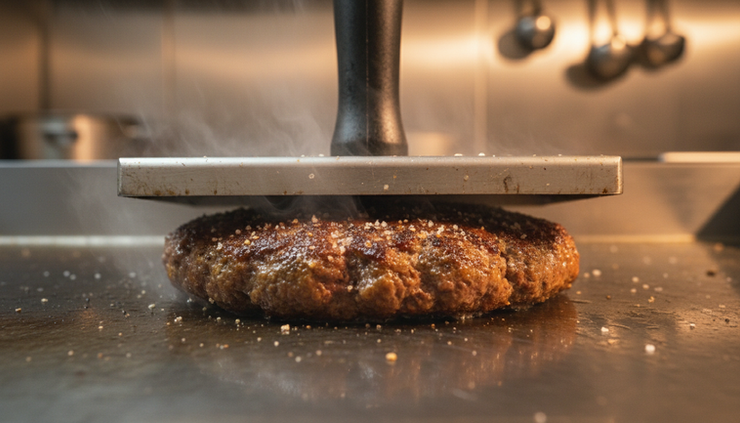
A fresh Angus patty smashed on a ripping hot surface behaves differently from a frozen puck dropped on a grill. It spreads. It sears. The edges lace and crisp. The surface browns quickly, which creates a savory, salty crust that carries the whole burger.
Marketing can promise “bold flavor.” Craft delivers it through heat, pressure, timing, and restraint.
Here is the simplest way to think about it:
Marketing jargon says a burger is packed with flavor.
Mass production prizes sameness.
Frozen patties are shaped for convenience.
Sauce-heavy builds cover weakness.
Real quality lets the beef, crust, toppings, and sauce prove it.
Artisan cooking prizes control.
Fresh smashed patties are shaped by heat and pressure in the moment.
Balanced builds support the beef instead of hiding it.
A proper Latin burger does not need to shout. It just needs to land every detail.

The proprietary smash technique creates the crust people remember
The smash burger method looks simple from a distance. Ball of beef, hot griddle, press it down. Yet the best version depends on precision.
A proprietary smash technique takes that simple idea and turns it into repeatable craft. The goal is not just to flatten the meat. The goal is to maximize contact between beef and steel at exactly the right moment.
That contact creates the crust.
When fresh beef hits a hot flat top, the surface begins to brown. Pressing it early spreads the meat and builds more surface area. More surface area means more crispy edges, more browning, and more places for salt to grip. The cook has to know when to press, how hard to press, and when to stop touching it.
Too little pressure and the patty stays thick without enough edge. Too much handling and the juices run out. Too cool a surface and the meat steams. Too long on the heat and the crust turns dry instead of crisp.
The sweet spot is narrow, but when it works, the burger gets that snap at the edge and that savory chew in the center. The crust tastes salty, beefy, and almost toasted. It carries the sauce instead of getting soggy under it.
That is why the smash matters so much for Latin flavor burgers. Latin-inspired toppings often bring bold personality. There may be creamy sauces, sweet plantain notes, jalapeño heat, grilled peppers, tangy slaw, or crunchy potato sticks. Without a strong beef crust, those toppings take over.
With a proper crust, the burger stays anchored.
The beef becomes the center of the experience, not just the platform.
Complexity comes from contrast, not from piling things higher
A towering burger can look exciting, but height alone does not create flavor. A burger becomes complex when each layer has a job.
The best Latin-style builds often use contrast in five ways:
Salt
The crust needs enough seasoning to wake up the beef. Salt on the outside matters because it meets the heat directly. It does more for the bite than seasoning buried deep inside the patty.
Crunch
Crunch should be intentional. Crispy potato sticks, toasted buns, seared edges, shredded lettuce, fried elements, or pickled vegetables can all work. The key is choosing crunch that lasts long enough to matter.
Heat
Heat should rise, not attack. Jalapeño, chipotle, habanero, or a South of the Border heat profile can bring fire, but the best burgers give that heat a rhythm. A little smoke, a little acid, a little cream, and the bite becomes fuller.
Creaminess
Cheese, avocado, aioli, or a creamy house sauce can soften the edges of spice and salt. Creaminess gives the burger body.
Acid
Pickles, lime, vinegar-based slaw, or pickled onions cut through richness. Without acid, a loaded burger turns heavy fast.
A mass-produced burger usually cannot manage this kind of balance well. It is built for speed and consistency across thousands of units. An artisan burger can adjust the build so the crunch, sauce, heat, and beef all show up in the right order.
That is the difference between a burger that is merely loaded and one that feels composed.

The 1/2 Lb Colombian Burger shows what abundance should taste like
A 1/2 Lb Colombian Burger should feel generous, but generosity only works when structure keeps it from becoming chaos.
Colombian-style burger builds are famous for going beyond the basic lettuce, tomato, onion routine. They often bring a playful mix of savory, creamy, crunchy, and sweet elements. Think beef, cheese, sauces, crisp potato sticks, and toppings that make the burger feel celebratory.
The danger is overload. Too many toppings can flatten the flavor. The bun collapses. The beef disappears. Every bite turns into the same soft, saucy blur.
The artisan version avoids that trap by treating abundance as architecture.
A strong 1/2 lb Angus base gives the burger weight and presence. The smash technique creates enough crust to stand up to the toppings. A toasted bun gives the build a firm start and finish. Crunch stays near the top where it can still be felt. Sauces are placed to season the burger, not flood it.
When done right, the 1/2 Lb Colombian Burger becomes more than a big burger. It becomes a full flavor experience.
The first bite should bring that salty crust, then creaminess, then crunch. A little sweetness or tang can round it out. The beef remains clear all the way through.
That is craftsmanship. Big flavor, controlled with care.
South of the Border heat should build flavor before fire
Heat gets misunderstood in burgers. Some kitchens treat it like a dare. Add more peppers. Add hotter sauce. Make it painful, then call it bold.
That misses the point.
South of the Border heat should bring depth before intensity. The best spicy burger is not measured by how fast someone reaches for a drink. It is measured by how much flavor the heat carries.
A well-built spicy profile might include:
Jalapeño for fresh green bite
Chipotle for smoke
Pepper jack or melted cheese for richness
Pickled peppers for tang
Creamy sauce to stretch the heat across the burger
A crisp beef crust to keep the flavor grounded
The heat should arrive in waves. First comes aroma. Then a little brightness. Then warmth. Then the beef pulls everything back into balance.
That is how a South of the Border burger becomes craveable instead of one-note. The spice gives the burger energy, but it does not erase the Angus flavor. The crust still matters. The bun still matters. Crunch still matters.
A great spicy burger invites another bite. It does not punish the first one.
Artisan quality shows up in the small decisions
Craftsmanship in burgers is easy to overlook because the food feels familiar. Everyone knows what a burger is supposed to be. Bun, beef, cheese, toppings, sauce. Simple.
Yet the gap between ordinary and unforgettable lives in small choices.
A serious burger maker thinks about details like these:
How loosely the beef is formed before smashing
Whether the griddle is hot enough to sear instead of steam
How soon the patty is pressed
When salt hits the surface
How deeply the bun is toasted
Whether the sauce adds flavor or just moisture
Where crunchy toppings sit in the stack
How the burger holds together after three bites
None of that fits neatly into a buzzword. It does not always show up in a photo. But it shows up once the burger is in hand.
That is why frozen, mass-produced options struggle to match true artisan quality. They can imitate the look. They can copy the sauce color. They can borrow flavor names from Latin cuisine. What they cannot easily copy is the live decision-making of a cook managing heat, texture, timing, and balance.
Freshness is part of it. Skill is the rest.

A better burger experience starts with higher standards
Elevating a burger experience does not mean making it fancy. It means demanding more from each bite.
Look for beef that tastes like beef. Look for a crust with real texture. Look for toppings that bring contrast instead of clutter. Look for heat that has flavor behind it. Look for a bun that can handle the build without turning into paste.
Most of all, look for signs of craft.
A burger made with care feels alive. The edges crackle. The sauces have purpose. The salt lands cleanly. The crunch keeps you interested. The flavor moves from savory to tangy to spicy to creamy without losing the center.
That is the promise of authentic Latin flavor burgers when they are done with respect for both the burger and the flavors that inspire it.
The freezer can offer convenience. Marketing can offer big claims. Real Angus, a proprietary smash technique, and careful Latin-inspired layering offer something better: a burger worth slowing down for.
The next time a menu promises bold flavor, ask what is behind the words. If the answer is fresh beef, a hard sear, artisan crunch, balanced heat, and a burger like the 1/2 Lb Colombian Burger built with intention, that is the one to order.


Comments